|
|
|
Public School Years at John Norquay Elementary 1936 to 1943
contributed by Mr. Jim Hendry
|
|
|
|
The Primary Years |
|
|
Norquay was a Grade 1 to 8 school and in the lower years at that time they had half years. I was skipped a half grade on two occasions so I finished in 1943 after 7 years. I don't recall beginning school so this must have happened without too much trauma. My normal route to school was walking to the foot of Mannering Ave. to Nanaimo St., then a jog to the left to the lane running behind a field which then was on the corner of Kingsway and Nanaimo. There is now a hotel on this property. Then I'd travel up the lane to the top and then either cut out to Kingsway and along Slocan or across the field where the 2400 Court is now. There was a great frog pond there at the time. Then out to the Slocan corner. Finally up Slocan to the school.
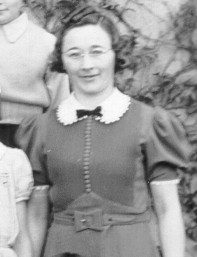
I had Miss Smart for each of my first 3 grades, but which spanned just two years. She was very consistent in manner, well dressed, smiling and encouraging. It is hard to imagine a more stable and secure environment in which to begin school. Only one incident from the primary years made me feel uncomfortable. It was a practice that primary pupils all received a small bottle of milk either white or chocolate. These were placed in each classroom every morning in a wooden box with wire dividers. Miss Smart was out of the room and there was some horsing around going on. I for some reason gave way to unusual behavior and went to the front corner where the milk was and tried to be amusing. At this minute Miss Smart returned and I felt a complete collapse in spirit. I think she only asked me what I was doing, but I felt completely ashamed of myself. Frustration for me in those early days was over doing things with my hands. Anything I cut out or pasted seemed to be so much cruder and messier than anyone else's. I have recollections of many days spent playing in the boys' basement. This seemed to be a combination of running around the basement plus up and down stairs and climbing the pipe railing which was around the entrance to the gym. School seemed to come easily and I think I got a lot of encouragement which helped immensely. When we were younger and before we took part in the regular sports day, we had primary grade activities at the front of the school which were mostly singing and maypole dancing. Both these activities were events that I disliked. I also remember that it was the thing to do to make disparaging remarks about these activities so maybe I followed the crowd. |
|
|
The Intermediate Years |
|
|
In the intermediate years, I began to become aware of the unusual pupils. There were those who were dull. There was one we called "Stoop" from Big Stoop in Terry and the Pirates. Another was Freddie. He was very thin and had some ailment. He ate great quantities of bananas. A lot of these boys were extremely tough and fights were common. I did not knowingly antagonize anyone and certainly had no wish to do so, so most of the rough stuff did not involve me. We did have scrambles and pileups and that was good fun. These mostly took place in the bushy area to the south of the soccer field. Just knowing that the intent was fun made it okay for me even if bangs and bruises did result. |
|
|
Friday afternoons at Norquay were shop times for the grade eights. We would ride our bikes during lunch hour up to Carlton School near Joyce Road and Kingsway. Mr. Green gave us wood shop and electrical shop. It was fun to have a change of scene and to go to the other school. Mr. Green was also something of an adventure himself because he was given to heart attacks. He took a hot drink of a yellow coloured liquid that was supposedly to curb any attacks, maybe it was just tea. One day he had a small attack and he stretched out on a bench and ordered us all to leave. He had discussed this procedure with us many times so there was no panic. He did as he said he would and we just filed out. He was a great one for strapping. He would do it in a back room where most of the noise came from banging the strap on the wall. Our class was very inconsiderate of him thinking back on it but we had some tough kids in the class. I was too intimidated by the strap and his poor health to cause much difficulty. My work was slow, of poor quality and not much fun. Most fun was after school because we would ride down hill on Kingsway heading home and it seemed that we could get up amazing speeds. |
|
|
World War II |
|
|
While we were at Norquay war was declared. It was a sad thing to learn and hard to comprehend that the Japanese family members who attended school were being sent away. We started to get lessons on honouring the flag and the King. Air raid practices were also a new drill. We would in a single file march out onto the field as we did for fire drill but then carry on off the field into the surrounding grassy fields behind the soccer field. We were told to carry handkerchiefs to pee into and put over our noses in case of gas attacks. One teacher in particular, Mr. Lynch, was very keen on the war effort. We would get regular lectures on the importance of making our own personal contribution such as collecting string and silver paper from cigarette packages. We were also to buy war saving stamps. He warned us against just getting the $0.25 from our parents. We were supposed to go and do some work to earn the money. Otherwise we were "lily livered and didn't have the backbones of jellyfish". I wasn't motivated to work harder by all this and the lectures certainly became tiresome.
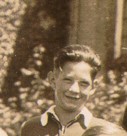
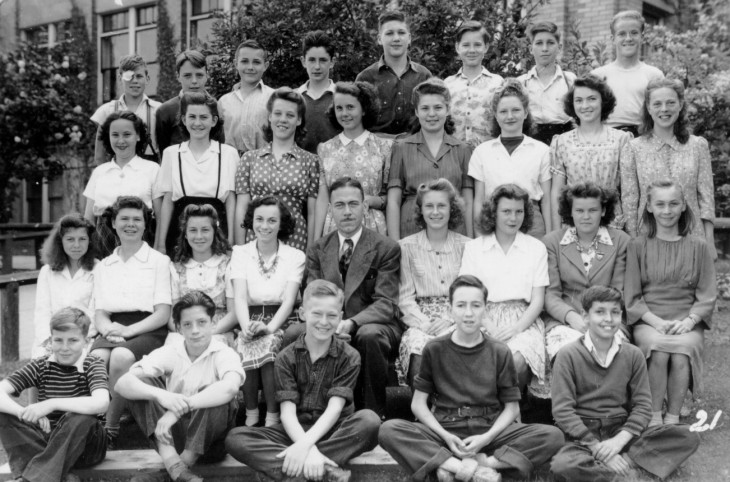
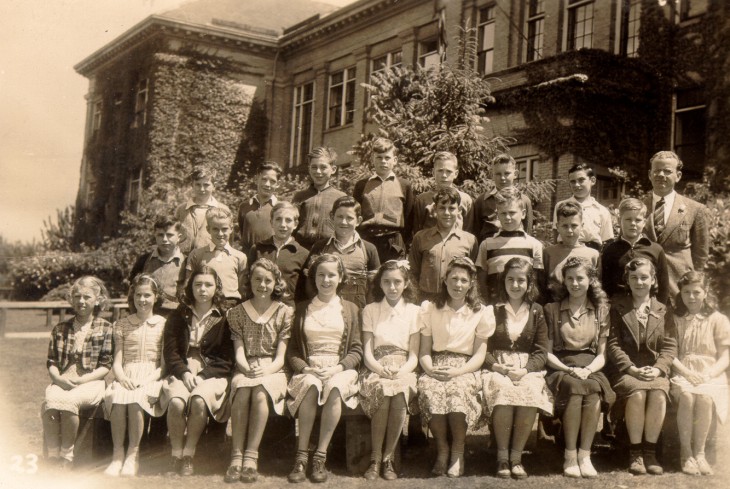
Jim's Grade 8 Class: Jim Hendry is in the front row, second from the left. The teacher is Mr. Lynch. |
|
|
Mr. Reid |
|
|
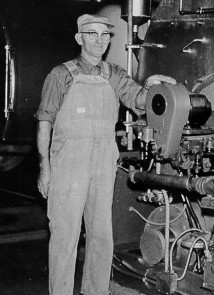
One of the favorite people around the school was Mr. Reid the janitor. He was keen on soccer and would encourage us all to play. He had a son in our year (Alex) who was very tall and a good player. Anyone was welcome at any time to go to the furnace room where it was very warm and dry.
|
|
|
Mr. McKenzie |
|
|
Ken McKenzie was another noteworthy teacher. His areas were English and sports. English in large part was blowing up soccer and basketballs and lining the field. I always felt that he was cheating the system and taking advantage but we didn't mind a bit. He later became principal of Gladstone Secondary. |
|
|
Academics |
|
|
As I reached the senior years at Norquay (grades 7-8) I realized more and more that some of us were having a much easier time of it than others. Bob Myers was a boy who was sort of 1-2 with me each year. Then in grade 8, Mr. Wallace, who was then vice-principal of John Oliver High School, spoke to our class. He said that probably the top 20% of the class would go to high school and do well. He also left the impression that there was a duty for people in that 20% to carry on and make use of this ability. This was a time when kids were staying in school up to ages 15 or 16 even though they failed each year. There was no work, and often no one at home. The schools were at least warm. I certainly was convinced that I was part of a special group. I felt inwardly proud and pleased to be in that group. |
|
|
Fun and Games |
|
|
I find it interesting to note how much of school life, particularly in the elementary years, related to the season of the year. Fall was always recognized by the many paper autumn leaves put up on classroom walls and windows. This was followed by Halloween pumpkins, black cats and scary witches. Next was Christmas meaning coloured paper chains, snowmen, jolly Santa images and of course the Christmas concert. No sooner were we back from Christmas break than it was Valentines Day with red hearts galore again displayed around the room. We also shared valentine cards with as many friends as we had and based on our enthusiasm about preparing the cutout cards. Next came Easter with bunnies, eggs and chocolate candies. What with the pasting, sticking and tacking that went on during the course of the year the rooms took a real beating. I don’t know much about the activities of the girls outside the classroom, but the following speaks of boy’s activities, once again occurring in accordance with the seasonal changes (read weather). One of the first activities was horse chestnut competitions. A chestnut would be pierced with a nail and then threaded with a shoelace which was knotted on the underside to hold the nut securely. Next a victim would be challenged to hold up his chestnut. The confident challenger would swing his chestnut as hard as possible trying to hit and smash the victim’s chestnut. Sometimes there were surprising results because while it was not sporting to do so, some boys would roast their chestnut at home. This would harden the chestnut giving a real advantage. After a day or so, the practice would become common and the advantage lost. Soon it was snow and ice time. Of course breaking the ice on puddles was irresistible. Also irresistible were the snowball fights which were banned on the school grounds but happened anyway. After all how could one snowball hurt and away it went. There was also the bush to the south of the playing field where anything went. The approach of spring brought a greater array of activities. One was playing marbles which we called alleys. Don’t know why. Nearly every boy had an alley board which was made at home. It was made from a 15 inch piece of 1 by 4 which was supported in an upright position by triangular pieces fastened to each end. The front had a number of spaces of varying sizes cut into the front, and marked with numbers over the spaces to indicate the degree of difficulty of getting an alley through the space. The more difficult the challenge the greater the payoff. The board owner would keep any alleys not making it through a space, and pay off the applicable number of alleys for any successfully making it through a space. This was an early example of a free market activity. Anyone having a too challenging board would be shunned while anyone offering an easier payoff would receive a lot of attention. Another alley game was “rounds”. Four holes would be scooped out from the earth at the corners of a 3 or 4 foot square. Another hole was scooped out in the centre of the square. Two or more would start out at one of the corners, each shooter having one shot at a time. As each corner hole was “sunk” the successful player would proceed to the next corner with the final goal being the centre hole. The game was either for “fun” or else the winning player would claims the alleys from the other player/s. The other alley game was to scratch a circle in the dirt about 5 feet in diameter. The host would place a number of alleys in the centre of the circle and invite challengers to try to shoot out of the circle any of the target alleys. Alleys shot out were claimed by the shooter. Failure to get any alleys outside the circle meant forfeiture of the shooting alley. This challenge introduced the use of larger alleys (“cobs”) as the shooter. Use of a cob improved odds of winning but loss of a cob was considered a major loss. Another springtime activity was playing with milk bottle caps. Everyone received their milk in glass bottles and each bottle had a bottle cap. The game was one on one. The caps were thrown to the ground from a standing position, the aim being to have the cap land flat on the ground and stay in position. Both or neither being successful was considered a draw. Otherwise the loser lost his cap to the other. Winning either alleys or bottle caps from school mates was enough to set one up for the rest of the day. For the higher grades, chestnut banging, alleys and bottle caps were seen as a little juvenile. However yo-yo and bolo were available to satisfy the needs of boys seeking competitive activities. At the NE corner of Slocan and Kingsway, there was what is now known as a convenience store. I think we just called it a candy store. Speaking of that, there was also a candy store immediately across the street from the school. Anyway on alternative years either yo-yos or bolo bats were on the market at the store at Slocan and Kingsway. After school, a representative of the game company would be at the front of the store and he would demonstrate various tricks to his admiring onlookers. We were encouraged by the prospects of gold, silver or bronze badges which were handed out for attaining certain levels of tricks. There was also an ongoing contest for certain tricks, the prizes being either yo-yo strings or bolo bat elastic strings. Some of these skills remain to this day. I also remember that the school organized a competition in the gym which existed at that time. This was a thoughtful idea on the part of the school which recognized the importance of these activities to the boys. |
|
|
Jim Hendry's Norquay Teachers |
|
|
1936/37 and 1937/38: Miss Smart (Grades 1-3) 1938/39: Miss Sharp (Grade 4). 1939/40: Mrs. Cruikshank (Grade 5). 1940/41: Mr.Whittaker (Grade 6) 1941/42: Mr. McKenzie (Grade 7) 1942/43: Mr. Lynch (Grade 8) Mr. Clarke was the principal.
|
|
|
The Mystery Teacher - Miss Sto |
|